
The Bear did not win Best Musical/Comedy Series at the 2023 Golden Globes, but Jeremy Allen White won Best Actor for his role as Carmy. Abbott Elementary was nominated in 2022 and won the award in 2023, which is logical. Oh, does that mean that the best series award will be given to The Bear next year?

In recent years, there have been more and more quality comedies, and the phenomenon of a comedy receiving nominations and awards for several years in a row is back.
1 - Cruel Kitchen
This show tells the story of what happens in the kitchen of a sandwich store. At first glance, we might think of the delicious food, the sophisticated décor, the warm and welcoming staff, or even the romance that occurs in this restaurant. We have seen many movies and TV series with chefs at their core, such as Eat Pray Love (2010), Julie & Julia (2009), and Burnt (2015).
In those productions, the food has color, aroma, shape, and taste that delights people and creates memories of it. It represents the pursuit and aspiration for quality life, being the tip of the iceberg in a gorgeous middle-class life. But in fact, everything we said is not in this show. No, I'm not being objective when I say that. There is food in The Bear, but it doesn't provide more than five seconds of happiness. A satisfied smile or a short "great, thanks" is all we get.

No one can escape from the lure of food. As the place where food is produced, the kitchen has become a representative of the well-lived life. Movies and TV shows naturally do not miss this sacred place. They do not hesitate to glorify the kitchen, so much so that we forget that it is just an emotionless workplace.
Watching The Bear with this food memory in mind, we realize that the focus of the show is not on the food at all, but on the kitchen. It relentlessly lets the tension, the high pressure, the angst, and even the emotional breakdowns in the kitchen unfold before the audience. In this drama, all food has a price. It's more like a workplace drama that reveals the truth about what goes on in the kitchen.
The story revolves around Carmy, a chef working in a top-tier Michelin restaurant around the world. Due to his brother's sudden suicide, he is forced to return to Chicago to run the family sandwich restaurant. The sandwich restaurant may look relaxed, but the kitchen in the camera is flooded with anxious and depressing emotions.
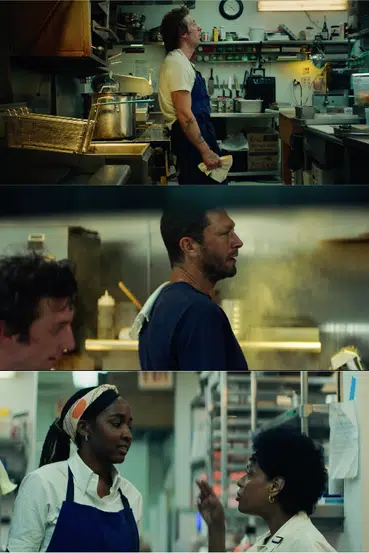
The original small and crowded corner of the kitchen is infinitely magnified in the fast alternating editing and patchwork of images. It is so deep that it is suffocating. The employees are fighting every second as if they are going through a battle, where the slightest carelessness will lead them to be eaten alive by the heat, grease, and ubiquitous anxiety.
While the customers are relaxed and happy with the food, the people in the kitchen are hissing and shouting, interspersed with continuous chopping, sizzling, and frying, sharp clashes of utensils, and steam from boiling hot water. The kitchen door is like a wall separating two worlds, with people on one side immersed in pleasure and those on the other suffering from heat, injury, and pain.
2 - The Incompetent Chef
Besides revealing the facts of the kitchen, The Bear also depicts the profession of a chef coldly and objectively. In previous works, chefs were like knights, elegant, and noble, with indescribable magic between each movement, as if their every action could be classified as modern art. They exist like God, using their hands to cook food to save those hungry civilians. For a long time, the image of the chef was deified, as if one of their dishes could put out the fires of life's mediocrity.
However, the show tells us, to forget it, chefs are crazy. In a seven-minute monologue in episode seven, Carmy explained why he wanted to be a world-class chef: to prove to his brother that he was the best. In the kitchen, he is serious and focused, like a general in charge of an army. He doesn't allow deviations or mistakes in the food he cooks, because food is not about emotions, it has a standard of perfection. The rhetoric is not helpful, what he needs is to do his best to win the battle, even if this best may drive people crazy.
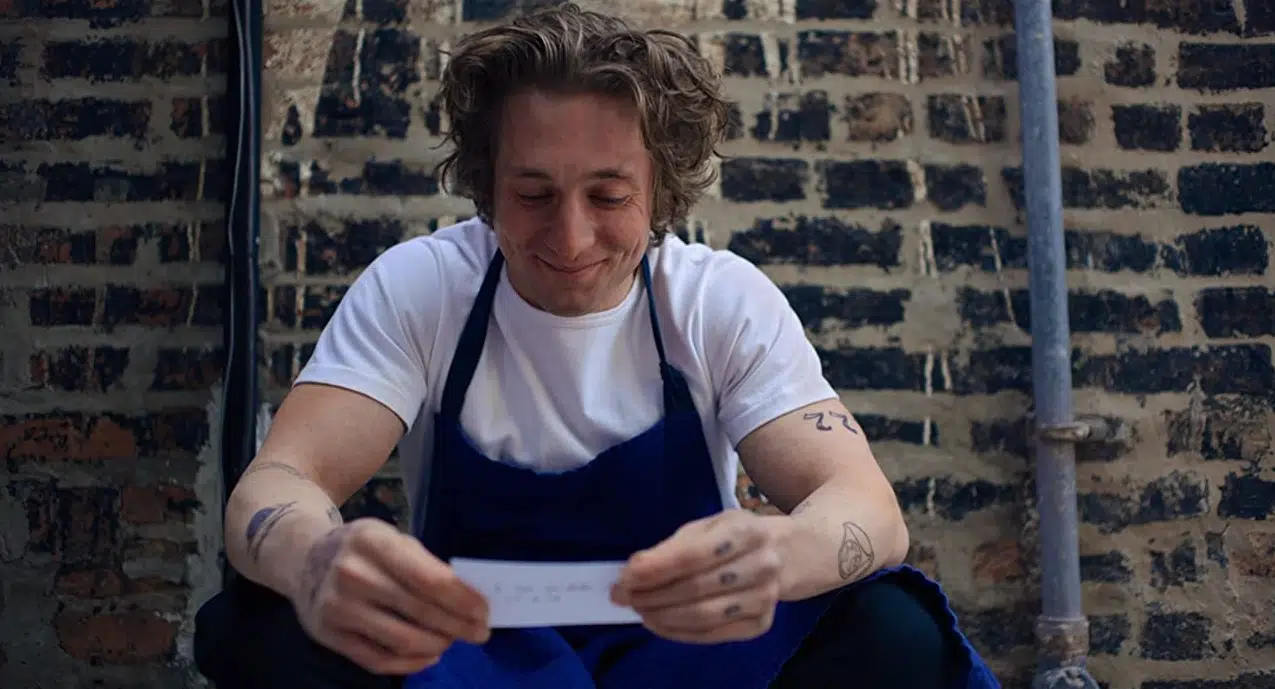
The pain and doubt in this monologue are explained in the eighth episode. I won't spoil too much here, the eighth episode is touching.
This show is a comedy. It makes people laugh because its tragic undertones are profound. In history and in contemporary times, the kitchen system is built of anger and rebuke. But in Carmy's mind, the kitchen is supposed to be a place of emotion, feeling, and love. If we compare him with his cousin, it is easy to see that one solves problems with bullets and fists, the other with communication and forgiveness. The methodology he implements is a shock to conventional masculinity, or, the traditional kitchen system.
By creating a broken male character like Carmy, the writers point the finger at the widespread contemporary male hegemony. Jeremy Allen White's performance perfectly illustrates his mental difficulties and torment, making it easy for the audience to empathize with the character.
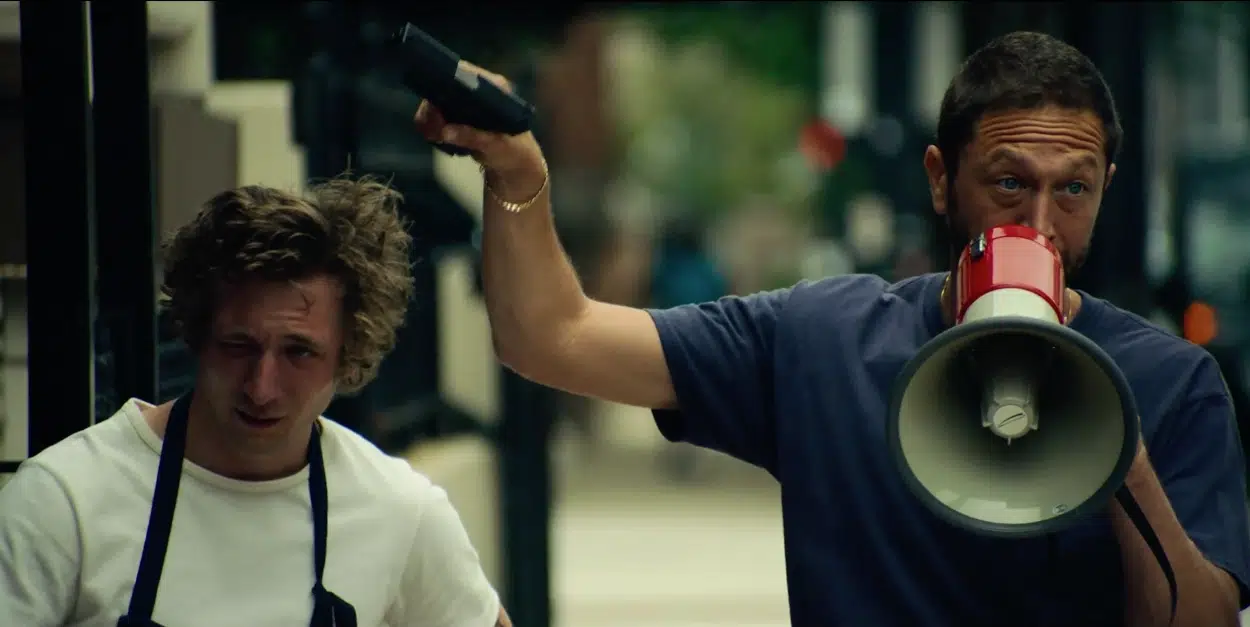
Vividly. LOL
3 - The collision between modern and traditional relations of production
We love to see the story of an ugly duckling becoming a white swan, and we also love to see a small restaurant turn into a Michelin restaurant after being tended by a famous chef. For example, The Hundred-Foot Journey (2014), which follows the transformation of a food stall that has been in business for generations from rustic cuisine to molecular gastronomy, is similar in that it also focuses on the differences between traditional relationships and modern ideas in the context of cooking. However, The Bear is about leaving the city and returning to the homeland, which is the opposite of the film's direction.
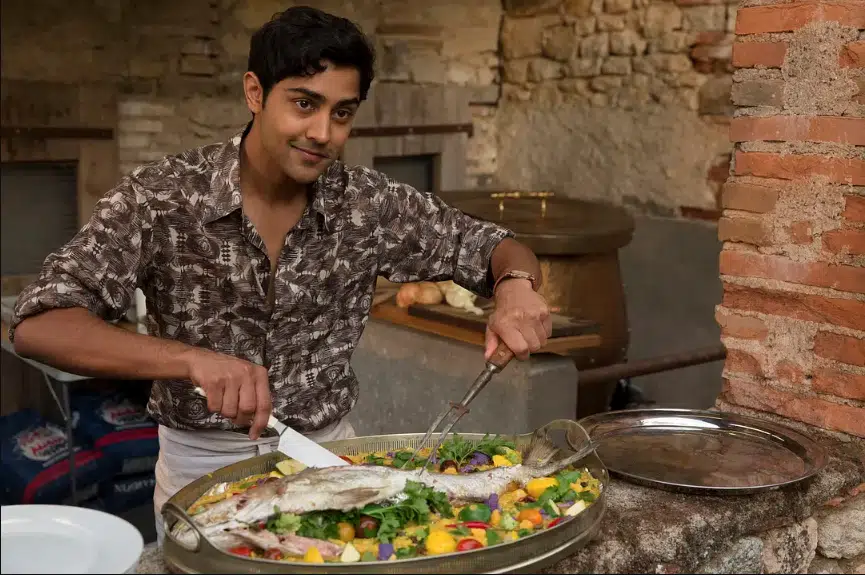
The Hundred-Foot Journey brilliantly combines Indian and French cuisines, with both confrontation and fusion. The whole film is full of color and flavor, with warmth, contradiction, reflection, and romance.
This family restaurant represents the primitive agricultural era. Its name was formerly called The Original Beef of Chicagoland, and it was called whatever it sold without a decent name. The restaurant's profitability was so low that it could only meet its break-even and couldn't complete matters such as equipment maintenance, debt repayment, and tax clearance. It covered a very small area of the surrounding residents and became the memories of this segment growing up. For example, although Sydney (played by Ayo Edebiri) in the play was a cook trainee, the main reason she came to the restaurant was that her father came every week.
It is also a field where multiple social relationships overlap, where some relationships intersect. the Bear is a drama based on a restaurant, but very few dishes are featured. The director is very stingy with the food shots, and they hardly appear if they are not meant to give context to the characters. For example, Carmy's mother doesn't turn up, but her taste appears twice, which is not possible in any other subject works. In this show, everything is only about taste, memory, and bonds.
The opposite of this is the industrial age. Le Cordon Bleu uses machines as a metaphor for the modern kitchen when explaining the kitchen preparation system, as neat, clean, and white as Noma in Carmy's memories. To emphasize the machine feel, the writers arranged a scene in Noma where the chef dismissed a sous chef because the dishes were not up to par. Don't underestimate this little hiccup, which illustrates the law of the machine's operation, that is, to replace parts that do not pass. There are no interpersonal relationships at Noma, only a clear workflow. Work and life are like two sides of life, there is a sense of boundary.
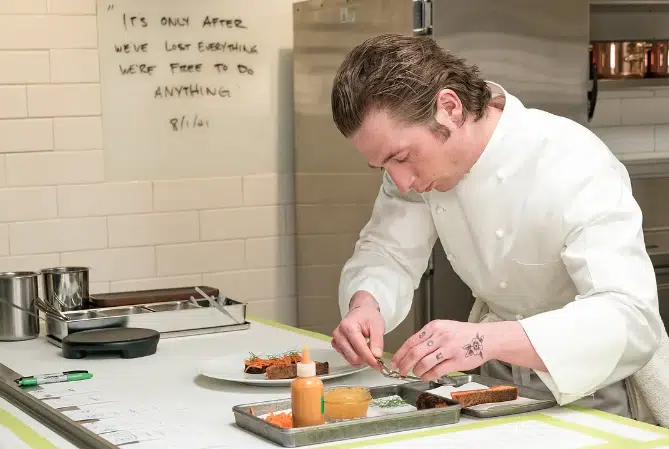
Memories of Noma are always bright and shiny, but of course, they are also cold.
Carmy is ambivalent. In Noma, he had a variety of tattoos under his chef's uniform that stood out against the white background. In The Bear, he pushed for an orderly management scheme that was scorned by others. He grew up in a modern, industrial kitchen, but he still misses the relationships of a home-based kitchen. He gained money and prestige in a working model that sought efficiency, but he always tried to find a warm relationship in the kitchen. Underlying Carmy's tear is the conflict between the multiple co-existing relationships in the kitchen's skill set heritage, including family, master and apprentice, academy, etc.
After watching this drama, it struck me that cooking is alive and well. It is different from any product or skill, its legacy begins with the birth of life and is inscribed with growth.


Share your thoughts!
Be the first to start the conversation.